

Prepare for your Marathon with real, useful data
Get your best marathon time with Precise data instead of guesswork
Stop wasting miles training in the dark.
We all have a limited amount of time to train, so why spend it on 'junk miles' that don't yield results? Every one of us is in a different place with our cardiovascular health; what feels like a recovery jog for one person might be a high-intensity strain for another. By measuring the specific way your heart, lungs, and muscles interact under stress, we can identify exactly where your fitness stands today.
However, your body isn't static—it’s an adapting machine. This initial test provides your Performance Baseline, but the real power of VO2 Max testing comes from seeing how that baseline shifts over time. By re-testing as you improve, you can objectively prove your gains, adjust your heart rate zones as you get faster, and ensure your program is actually moving the needle. Instead of pushing yourself to the brink of exhaustion every workout, this ongoing data allows you to dial in the precise intensity required to see the fastest adaptations and the most consistent progress.
You will gain insights into:
Your personalized heart rate zones
VO2 Max
Running Economy
Breathing Efficiency
Fuel Utilization
If you’re ready to train with purpose instead of guesswork, it’s time to use real data to your advantage.
Know your Zones - Maximize your efforts
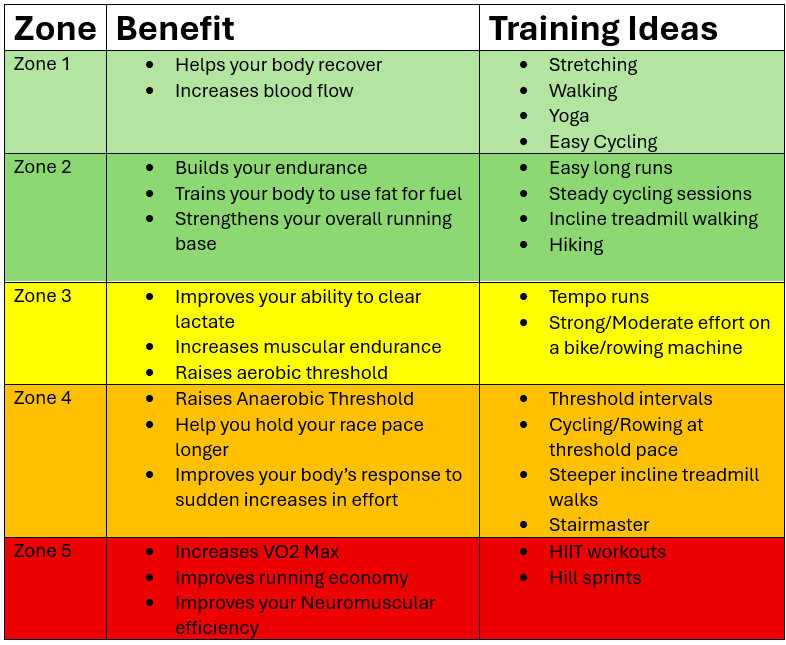
Training in the correct heart‑rate zone ensures you’re targeting the specific metabolic pathways that drive real performance gains.
Each zone activates different physiological adaptations—from improving mitochondrial density and fat oxidation at lower intensities to increasing lactate threshold and neuromuscular efficiency at higher ones. When your zones are based on actual VO₂ max data rather than estimates, you can precisely control training stress, optimize recovery, and develop the aerobic and anaerobic systems that matter most for marathon performance.
-
Description text goes here
-
Description text goes here
-
Description text goes here
-
Item description
-
Item description
What is VO2 Max?
-
Description text goes here
-
Description text goes here
-
Description text goes here
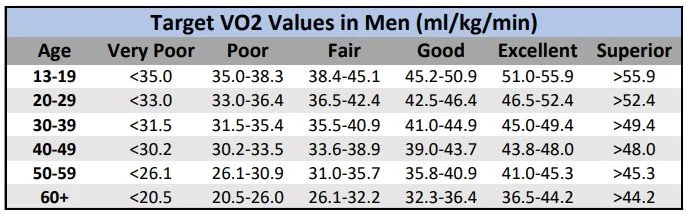
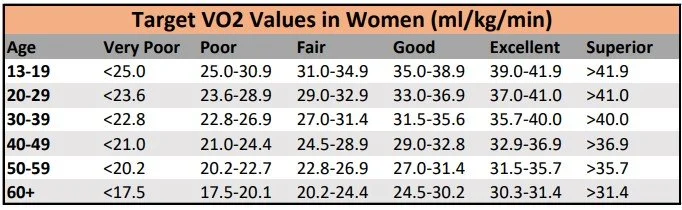
VO2 max is the maximum rate at which an individual can take in, transport, and utilize oxygen during intense exercise, typically measured in milliliters of oxygen per kilogram of body weight per minute (ml/kg/min). It reflects the body's aerobic capacity and is a key indicator of cardiovascular fitness and endurance performance.
It is crucial to measure as it accurately reflects aerobic fitness, predicts endurance capacity, and is strongly associated with reduced risks of all-cause mortality and cardiovascular disease, offering essential insights for optimizing health and tailoring exercise programs.
Running Economy
While your VO2 max represents the size of your "engine," your running economy (RE) determines how much fuel you burn to keep that engine running at a specific pace.
For distance runners, having a high VO2 max is a great start, but it’s often the runner with the superior economy—the one who can maintain sub-maximal speeds while consuming less oxygen—who crosses the finish line first. Knowing your RE is beneficial because it identifies whether your performance bottlenecks are cardiovascular or biomechanical.
-
No. VO2 max is your aerobic ceiling (capacity), while Running Economy is your efficiency at sub-maximal speeds. Think of VO2 max as your car's horsepower and RE as its gas mileage (MPG).
-
Factors like fatigue, footwear, temperature, and even the surface you’re running on can cause your efficiency to fluctuate day-to-day.
-
Yes! Many elite marathoners don't have the highest VO2 max in the field, but they win because their bodies are incredibly efficient at utilizing the oxygen they do have.
-
Biomechanical changes can take weeks, but structural changes (like tendon stiffness from strength training) usually take 8–12 weeks of consistent work to show measurable results.
-
Absolutely. Because RE is often measured as the oxygen cost per kilogram of body weight, any change in body composition or the weight of your gear (especially heavy shoes) will directly impact how much energy it takes to move.
-
Not exactly. While high vertical oscillation (too much bouncing) or overstriding (braking) usually hurts economy, your body naturally "self-optimizes" over thousands of miles. The most economical form is often the one your body has naturally settled into through high-volume training.
-
Running economy is the result of a complex interplay between your biology, your physics, and your training history. To better understand how to improve, it helps to categorize these factors into Fixed Factors (your genetic "hand") and Modifiable Factors (the things you can actually train or change).
Fixed Factors:
Anthropometrics - Your height, limb length and distribution of weight (having lighter calves/ankles is more economical
Muscle Fiber Type - our natural ratio of slow-twitch (Type I) to fast-twitch (Type II) fibers is largely determined by genetics.
Age - As we age, muscle mass and tendon elasticity naturally decline, though training can slow this process.
Modifiable Factors:
Neuromuscular Power - How effectively your brain "recruits" muscles to fire. This is improved through sprints and heavy lifting.
Tendon Stiffness - Your tendons act like springs. Plyometrics "harden" these springs so they return more energy upon impact.
Biomechanics - Aspects like cadence (steps per minute) and vertical oscillation (how much you "bounce") can be optimized.
Metabolic Efficiency - Training at specific intensities helps your body become better at using fat and glycogen as fuel sources
Footwear Selection - The weight, cushioning, and energy-return properties of your shoes play a massive role in how much energy is lost at impact.
Breathing Efficiency
While most runners focus on how much oxygen their muscles can use (VO2 max), the often-overlooked secret to endurance is how much work it takes to get that oxygen there in the first place. For an athlete, the real magic happens in how efficiently you move that air. In your VO2 Max report, we look at your Ventilatory Equivalents (VE/VO2 and VE/VCO2). These numbers tell us exactly how many liters of air you have to breathe to consume one liter of oxygen or exhale one liter of carbon dioxide.
VE/VO2 (Oxygen Efficiency): This measures the "cost" of getting oxygen to your muscles. Early in a workout, this number should be low. If it’s high, you’re "over-breathing" for the amount of work you’re doing, which wastes energy and fatigues your respiratory muscles.
VE/VCO2 (Waste Clearance): This is the most critical marker of your "exhaust system." It measures how hard your lungs work to dump the CO2 your muscles produce. A stable, low VE/VCO2 slope means you can maintain a fast pace without feeling that "smothered" or "gasping" sensation.
Turning Data into Miles: Why These Numbers Change Your Training
1. Identify Your "Panic Breath" Threshold
Your $Turning Data into Miles: Why These Numbers Change Your Training
1. Identify Your "Panic Breath" Threshold
Your VE/VCO2 data tells us exactly at what heart rate your breathing becomes inefficient. By knowing this "break point," we can set your training zones so you can practice running just below that threshold, teaching your body to stay calm and efficient at higher speeds.
2. Optimize Your Pacing Strategy
If your VE/VO2 is high at lower speeds, you are burning too much energy just to breathe. We use this to identify if you need more Zone 2 (Base) Aerobic training to make your "internal engine" more economical before you start adding heavy speed work.
3. Improve Your 'Air Management'
High VE numbers often indicate shallow, chest-dominant breathing. Once we identify an efficiency leak in your report, you can incorporate targeted breathwork or rhythmic breathing (e.g., a 3:3 inhale-to-exhale step ratio) to lower the metabolic cost of your respiration.
4. Predict Your Performance
Your VE/VCO2 slope is often a better predictor of race-day performance than VO2 Max alone. It tells us how long you can "suffer" at a high intensity. Improving this slope means you can hold your 10k or Half-Marathon pace with a lower perceived effort. VE/VCO2 data tells us exactly at what heart rate your breathing becomes inefficient. By knowing this "break point," we can set your training zones so you can practice running just below that threshold, teaching your body to stay calm and efficient at higher speeds.
2. Optimize Your Pacing Strategy
If your VE/VO2 is high at lower speeds, you are burning too much energy just to breathe. We use this to identify if you need more Zone 2 (Base) Aerobic training to make your "internal engine" more economical before you start adding heavy speed work.
3. Improve Your 'Air Management'
High VE numbers often indicate shallow, chest-dominant breathing. Once we identify an efficiency leak in your report, you can incorporate targeted breathwork or rhythmic breathing (e.g., a 3:3 inhale-to-exhale step ratio) to lower the metabolic cost of your respiration.
4. Predict Your Performance
Your VE/VCO2 slope is often a better predictor of race-day performance than VO2 Max alone. It tells us how long you can "suffer" at a high intensity. Improving this slope means you can hold your 10k or Half-Marathon pace with a lower perceived effort.
-
At rest or during easy exercise, a typical ratio is between 20 and 25. This means you breathe roughly 25 liters of air to extract 1 liter of oxygen.
-
Actually, it’s the opposite. A lower VE/VO2 ratio indicates higher efficiency. It means you are extracting more oxygen per breath, so your lungs don't have to work as hard.
-
This usually happens at your Ventilatory Threshold (VT1). Your VE/VO2 ratio will hit its lowest point and then start to rise as your body breathes more aggressively to clear out CO2
-
Yes. You might have a massive aerobic "engine," but if your breathing mechanics are poor, you'll waste a significant portion of that energy just powering your diaphragm.
-
VT1 vs Aerobic Threshold:
These two terms describe the transition from "very easy" to "steady" running.
VT1 (Ventilatory Threshold 1): This is a breathing marker. It is the exact moment your breathing depth and rate increase to clear out the first small rise in $CO_2$. On a lab report, this is the "nadir" or low point of your $VE/VO2$ curve.
Aerobic Threshold (AeT): This is a metabolic marker. it is the highest intensity at which your muscles can still comfortably produce energy using oxygen and fat.
The Difference: Think of AeT as the internal limit of your aerobic engine and VT1 as the outward sign (your breath) that you’ve reached that limit. For most runners, they occur at the same heart rate. If you are training for a marathon, raising your VT1/AeT allows you to run faster while remaining "aerobically stable."
VT2 vs Anaerobic Threshold:
This is the point where things get difficult. You have moved past "steady" and into "hard" effort.
VT2 (Ventilatory Threshold 2): This is the point of "Respiratory Compensation." Your breathing becomes rapid, heavy, and labored because your blood is becoming too acidic from high-intensity work. You can no longer speak in full sentences.
Anaerobic Threshold (AnT): This is the physiological state where your body can no longer provide enough oxygen to meet the energy demands of the muscles. You begin to rely heavily on "anaerobic" (without oxygen) pathways, which produce byproducts that lead to rapid fatigue.
The Difference: AnT is the metabolic "red line" of your engine, while VT2 is the heavy panting and gasping that happens when you cross that red line. This usually corresponds to your maximum sustainable pace for about 45–60 minutes (roughly 10K to Half-Marathon race pace).
Lactate Threshold vs Anaerobic Threshold:
This is where the most confusion happens, as these two are the most frequently swapped terms in coaching.
Lactate Threshold (LT): This is a blood chemistry marker. During a lab test, a technician pricks your finger to measure the concentration of lactate in your blood. LT is the point where lactate begins to accumulate faster than your body can clear it away.
Anaerobic Threshold: As mentioned above, this is the broader term for the "limit" of your sustainable aerobic power.
The Difference: Lactate Threshold is a very specific data point measured in a lab (often defined as a blood lactate concentration of $4\ mmol/L$). Anaerobic Threshold is a more general term used by coaches to describe the "zone" where you are working at your maximum steady-state.
The Runner's Summary: > * VT1 / Aerobic Threshold = The end of your "Easy" zone.
Lactate Threshold = Your "Tempo" or "Threshold" pace.
VT2 / Anaerobic Threshold = Your "Red Line" where you begin to fail.
Fuel Utilization - The Art of Metabolic Efficiency
While VO2 max defines your aerobic ceiling, fuel utilization (or metabolic efficiency) determines how you power your engine at various intensities.
At any given pace, your body pulls energy from two primary sources: fat and carbohydrates (glycogen). Understanding this balance is the key to mastering the "long game" of distance running—where the goal is to preserve your limited carbohydrate stores for as long as possible.
Knowing your specific "Fat Max" (the intensity at which you burn the most fat) allows you to train your body to become metabolically flexible. A runner who can burn a higher percentage of fat at a faster pace is less likely to "hit the wall" (bonk) because they are sparing their glycogen for the final miles of a race.
-
As your running intensity increases, your body’s preferred fuel source shifts. At lower intensities (like an easy recovery run), your body is highly efficient at oxidizing fat, an almost limitless energy source. As you speed up and approach your lactate threshold, your body shifts toward burning carbohydrates, which are faster to process but exist in finite supply within your muscles and liver.
-
Training Intensity - Higher intensity always demands more glucose/glycogen.
Dietary Habits - A diet consistently high in carbohydrates can "train" the body to rely on them, while strategic fasted runs or lower-carb phases may increase fat oxidation.
Aerobic Base - The more mitochondrial density you have (built through high-volume easy running), the better you become at burning fat.
Genetics - Some individuals are naturally "better" fat burners, though training usually overrides these baselines.
-
Low-Intensity "Base" Miles: Running at a truly easy pace (Zone 2) forces your mitochondria to prioritize fat oxidation.
Long Rides/Runs: Extending the duration of your workouts depletes initial glycogen, forcing the body to adapt by utilizing fat more effectively.
Nutritional Timing: Periodically performing morning runs before breakfast (fasted) can jumpstart the metabolic pathways responsible for fat burning.
-
"Hitting the wall" (or bonking) happens when your body runs out of stored glycogen (carbohydrates) in the liver and muscles, forcing your brain to slow you down as it shifts primarily to fat for fuel.
-
efficient, but weight loss is still governed by your total daily caloric balance.
-
Fat is a "slower" fuel source. While it's great for endurance, it requires more oxygen to break down than carbs, which can make high-intensity efforts feel significantly harder.
What does the test look like?
-
Do a single test for $150
Get $30 off when you bundle with other tests.
Military/First Responders/Teachers show your ID and get 10% off
-
You will be equipped with a specialized mask and heart rate monitor. Once you're ready to begin, you'll start with a gentle warm-up to get used to the treadmill. As the test progresses, the speed and incline of the treadmill will gradually increase, challenging your cardiovascular system to its maximum capacity. Depending on your fitness level the test should last about 10-15 minutes.
-
We utilize a Kickr bike for the test. We have flats provided, if you would like to bring your own pedals please do so.
You will be equipped with a specialized mask and heart rate monitor. Once you're ready to begin, you'll start with a gentle warm-up to get used to the bike. As the test progresses the watts will gradually increase, challenging your cardiovascular system to its maximum capacity. Depending on your fitness level the test should last about 10-15 minutes.
-
12-24 hours prior to your appointment - avoid exercise, avoid taking any supplements or unnecessary over the counter medications. Drink plenty of water to stay hydrated.
4 hours prior to appointment - avoid eating food or consuming any caffeine.
Come well rested and ready to give your maximum effort.
Come in comfortable running clothes. Avoid any new clothing/shoes that may impact your performance.
-
If you have any medical conditions including asthma, please consult with your doctor before making an appointment to verify this test is right for you.
For the cycling test max weight is 250 pounds.
