
Prepare for your Marathon with real, useful data
Get your best marathon time with Precise data instead of guesswork
Stop wasting miles training in the dark.
We all have a limited amount of time to train, so why spend it on 'junk miles' that don't yield results? Every one of us is in a different place with our cardiovascular health; what feels like a recovery jog for one person might be a high-intensity strain for another. By measuring the specific way your heart, lungs, and muscles interact under stress, we can identify exactly where your fitness stands today.
However, your body isn't static—it’s an adapting machine. This initial test provides your Performance Baseline, but the real power of VO2 Max testing comes from seeing how that baseline shifts over time. By re-testing as you improve, you can objectively prove your gains, adjust your heart rate zones as you get faster, and ensure your program is actually moving the needle. Instead of pushing yourself to the brink of exhaustion every workout, this ongoing data allows you to dial in the precise intensity required to see the adaptations you want and make the most consistent progress.
You will gain insights into:
Your personalized heart rate zones
VO2 Max
Fuel Utilization
If you’re ready to train with purpose instead of guesswork, it’s time to use real data to your advantage.

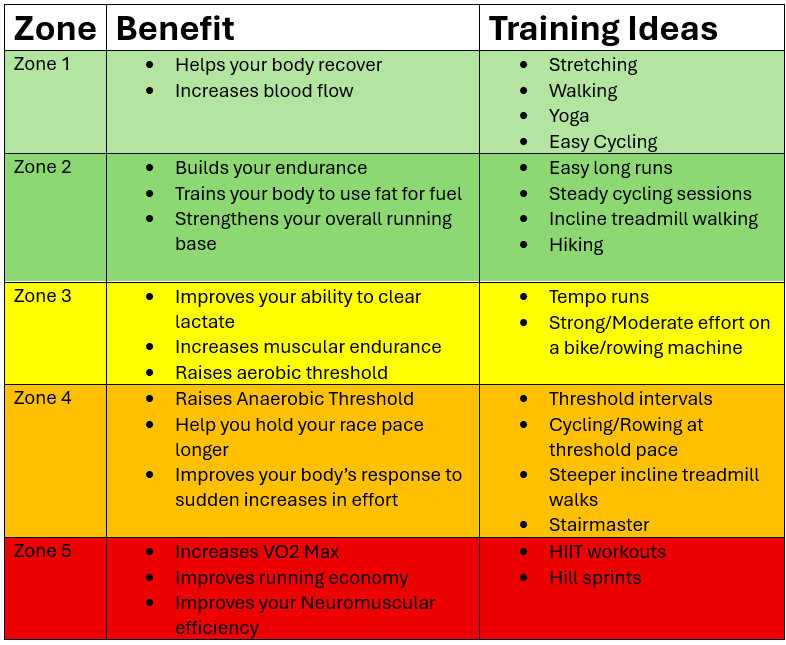
Know your Zones
Stop guessing and start training. Most athletes fall into the "gray zone"—pushing too hard to recover properly, but not hard enough to actually get faster. By basing your heart rate zones on actual VO₂ max data rather than age-based formulas, you move beyond generic estimates to find your body’s unique physiological "switch points." This precision allows you to target the specific metabolic pathways that drive performance, ensuring every mile you run is actually moving the needle.
Whether you are building mitochondrial density for long-range endurance or sharpening your lactate threshold for a personal best, data-driven zones take the ego out of training. You’ll gain the ability to precisely control training stress, optimize your recovery windows, and develop both the aerobic and anaerobic systems that matter most for race day. When you know your exact numbers, you don't just work harder—you work significantly smarter.
-
The Aerobic Threshold is the highest intensity at which your body can sustain exercise primarily using its aerobic energy system. At this specific point, your body is incredibly efficient, fueling itself mostly by breaking down body fat with the help of oxygen.
Think of it as the "top of your first gear." Once you cross this threshold, your body's demand for energy exceeds what it can produce from fat alone, and it begins to rely more heavily on glycogen (sugar) and starts producing more lactic acid.
-
The Anaerobic Threshold is the highest intensity you can sustain where your body is still able to clear lactic acid as fast as it produces it. In exercise science, this is often called the "tipping point" or "red line."
When you stay below this threshold, you are in a "steady state"—your breathing is heavy but controlled, and your muscles aren't burning uncontrollably. The moment you cross above it, your body can no longer keep up with the metabolic waste products (hydrogen ions and lactate), and you begin a rapid countdown to total muscle fatigue.
-
The Gray Zone (often referred to as Zone 3) is the middle ground of intensity where you are going too fast to be "easy" but too slow to be "hard." In this zone, your heart rate is high enough to cause significant fatigue, but not high enough to trigger the high-end speed and power adaptations found in the upper zones. Most self-trained athletes spend 70–80% of their time here, which often leads to a "performance plateau"—you feel tired all the time, but your race times aren't improving.
What is VO2 Max?
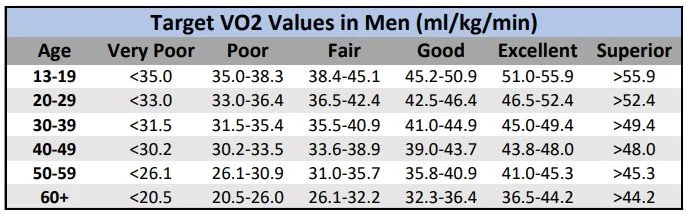
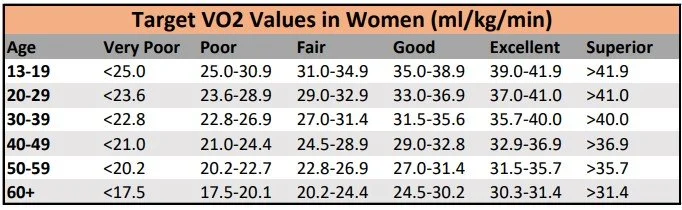
VO2 Max measures the maximum amount of oxygen your body can utilize during intense exercise. Think of it as your "engine displacement"—the larger the number, the more power your body can generate. Measured in milliliters of oxygen per kilogram of body weight (ml/kg/min), this metric is the ultimate gold standard for cardiovascular fitness. If you want to know your ceiling for endurance and performance, this is the number that defines it.
Beyond just a score, your VO2 Max is a "crystal ball" for your physical potential. It accurately predicts your endurance capacity and identifies where your cardiovascular system might be limiting you. Perhaps more importantly, it is one of the strongest predictors of longevity; higher VO2 Max levels are directly linked to a significantly lower risk of cardiovascular disease and all-cause mortality. Testing gives you the baseline you need to grow your engine and add years to your life.
-
Think of VO2 Max as the size of your engine. While a larger engine (higher VO2 Max) gives you a higher potential for speed and power, it isn’t the only factor in winning a race. Two athletes can have the same VO2 Max, but the one with better movement economy (how efficiently they move) and a higher Anaerobic Threshold will likely perform better. We measure VO2 Max to find your biological ceiling, but we use the rest of the test data to help you actually reach it.
-
While genetics set your "basement" and your "ceiling," almost everyone has significant room for improvement. For most athletes, VO2 Max can be increased by 15% to 25% through targeted high-intensity interval training (HIIT) and consistent aerobic base building. By testing with us, we identify exactly which type of training—short sprints or longer threshold efforts—will trigger the most growth for your specific physiology.
-
VO2 Max is "task-specific." Most people will score 5–10% higher on a treadmill than on a stationary bike because running recruits more muscle mass (which requires more oxygen). If you are a pure cyclist, your cycling VO2 Max is your most important metric. If you are a triathlete or general fitness enthusiast, the treadmill test usually provides the most accurate picture of your "true" maximum aerobic capacity.
Fuel Utilization
While your VO2 Max defines your aerobic ceiling, Fuel Utilization (metabolic efficiency) determines how you power that engine.
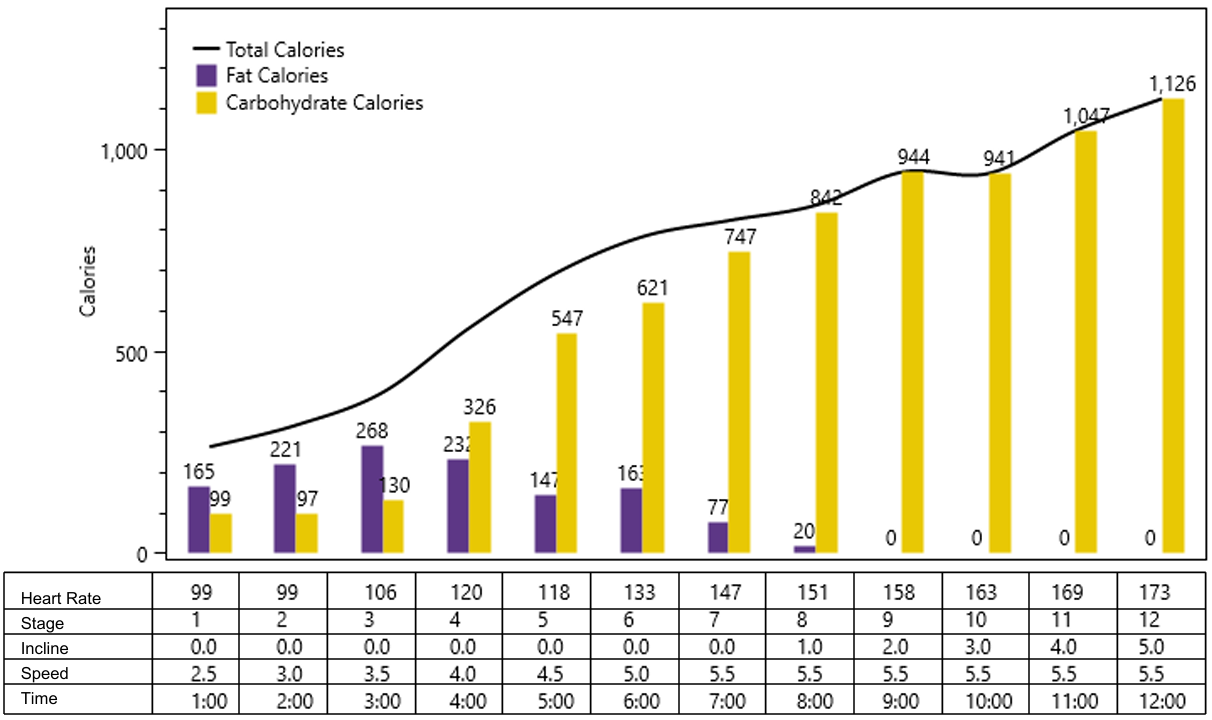
At every intensity, your body uses a "fuel mix" of two sources: Fat (your near-infinite energy tank) and Carbohydrates/Glycogen (your high-performance, but very limited, fuel tank). Mastering the "long game" of endurance is about teaching your body to burn fat at higher speeds so you don't "drain the battery" of your carbohydrate stores too early.
The Science of "The Wall" The primary reason athletes "hit the wall" isn't a lack of fitness—it's a fuel crisis. Your body can only store about 2,000 calories of glycogen, but even the leanest athlete has tens of thousands of calories available in body fat. By identifying your Fat Max (the exact heart rate where you burn the most fat per minute), we can help you build "Metabolic Flexibility." A runner who burns more fat at a 9:00/mile pace than they used to will arrive at the final miles of a marathon with their glycogen stores intact for that final push to the finish.
-
Fat Max is the specific exercise intensity (heart rate) where your body reaches its peak rate of fat oxidation. Knowing this number is vital because it tells us the "speed limit" of your efficiency. If your Fat Max is at a low heart rate, you’ll be forced to rely on sugar even at slow paces, which leads to early fatigue. We use this data to prescribe the exact intensity needed to "push" your Fat Max to higher speeds.
-
Absolutely. This is the primary goal of "Zone 2" or "Base" training. By training consistently at or just below your Fat Max, you signal your muscles to create more mitochondria and enzymes that specialize in burning fat. Over time, your "crossover point" shifts to the right, meaning you can run faster while still primarily using fat for fuel.
-
Not necessarily. While training at Fat Max burns the highest percentage of fat during the workout, higher-intensity intervals burn more total calories and can increase your metabolic rate for hours afterward. However, for long-term health and endurance, building a strong "fat-burning base" is essential for metabolic health and preventing "sugar crashes" during the day.
-
While your VO2 Max test identifies your "baseline" ability to burn fat, what you eat in the 24–48 hours before a race acts as a master switch for your metabolism. If you "carb-load" correctly, you maximize your glycogen stores (your high-intensity fuel). However, if you consume high-glycemic sugars too close to the start of a race, you can cause an insulin spike that temporarily "locks" your fat stores, forcing your body to rely almost exclusively on those limited carbohydrates. The goal of a professional fueling strategy is to provide enough glucose to keep your brain and muscles sharp without shutting down your body's ability to tap into its massive fat reserves.
-
Yes—this is the most practical application of your metabolic data. Our report identifies your Carbohydrate Oxidation Rate at specific heart rates. If the data shows you burn 60 grams of carbohydrates per hour at your goal marathon pace, but your gut can only absorb 40 grams per hour through gels, you have a "fueling gap." We use these numbers to help you either slow your pace to a more efficient zone or train your digestive system to handle the fuel required to maintain your target speed.
-
Metabolic flexibility is the ability to switch seamlessly between burning fat and carbohydrates based on intensity. An "inflexible" athlete burns sugar even at slow speeds, leading to early exhaustion. A "flexible" athlete—one who has trained their Aerobic Threshold—can cruise at a high speed using mostly fat, saving their glycogen for steep hills or the final sprint. Your VO2 Max report tells us exactly how flexible your metabolism is right now and gives us the heart rate targets to improve it.
What does the test look like?

We make the testing process seamless so you can focus on your performance. Here is what to expect during your appointment:
Preparation and Intake: When you arrive, you fill out a consent form and health questionnaire.
Gear-up: You’ll be fitted with a heart rate monitor and a metabolic mask. The mask is connected to our gas analyzer to measure every breath you take.
Warm-up: You will begin walking on a treadmill at a flat incline to get your muscles warmed up and slowly start raising your heart rate.
The Ramp-up to peak effort: Every minute we will increase the speed of the treadmill until you are at a comfortable sustainable pace. Once there we will increase the incline of the treadmill every minute until you get just past your anaerobic threshold.
Cool down and Recovery: We will decrease the incline back to zero and the speed down to a slow walk. We will then watch your heart rate come down for 2 minutes.
Get your Results: We will then go over the results together and answer any questions you have.
-
Yes,
The maximum weight we can test is 300 pounds.
If you have any heart conditions, are prone to passing out, or have been advised by your doctor not to do strenuous exercise we will not be able to test you.
-
1 Test: $99
*2 Tests: $179
*3 Tests: $239
*For the discounted tests they must be purchased at the same time. Credits for tests are valid for 2 years from the date of purchase.
-
12-24 hours prior to your appointment - avoid exercise, avoid taking any supplements or unnecessary over the counter medications. Drink plenty of water to stay hydrated.
4 hours prior to appointment - avoid eating food or consuming any caffeine.
Come well rested and ready to give your maximum effort.
Come in comfortable running clothes. Avoid any new clothing/shoes that may impact your performance.
-
Once on the treadmill the test last between 8 and 15 minutes depending on how long you need to warm up. Highly fit athletes take closer to 15 minutes.
-
We recommend testing 2 or 3 times.
1. Baseline
Ideally, you test at the very beginning of your marathon training. This establishes your aerobic floor and defines the heart rate zones you should train in.
2. The "Peak Phase" Re-Test
You should schedule your second test 4 to 6 weeks before your race day.
Why this timing? It takes about 4–8 weeks for the body to show measurable physiological adaptations to a new training stimulus.
The Goal: By testing 4–6 weeks out, you have enough time to use your updated Anaerobic Threshold (AT) to fine-tune your specific marathon goal pace. You can then spend the final month of training at those exact, updated intensities.
3. The Optional Post-Race Analysis
Wait 2 to 4 weeks after the race once your body has fully recovered. This shows you the "peak fitness" you achieved and helps set the floor for your next training cycle.